Blog Feed

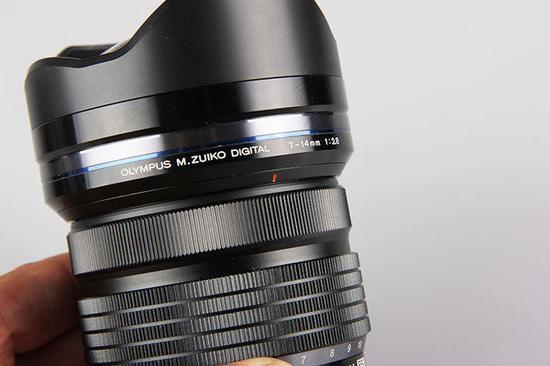
Top super wide angle Olympus 7-14mmF2.8PRO experience

As the highest-quality PRO series lens of Olympus’ M4/3 system, the new M.ZUIKO DIGITAL ED 7-14mm f/2.8 PRO continues the professional design of miniaturization and dustproof and splashproof, and also shows excellence. The optical performance has successfully solved the problems of distortion, chromatic aberration and glare of the super wide-angle lens. The release of this lens will better meet the creative needs of professional photographers and high-end users in the field of outdoor landscape photography. In conjunction with the previously released 12-40mm F2.8 PRO and 40-150mm F2.8 PRO lenses, Olympus has successfully achieved an unprecedented “big three” lens combination in the field of miniature single power, one from super wide angle to telephoto end. The full focal length constant large aperture lens solution is perfectly presented.

In addition, Olympus M.ZUIKO DIGITAL ED 7-14mm f/2.8 PRO is the first ultra-wide-angle lens with F2.8 large aperture in the M4/3 system lens group (including Panasonic and Sigma), the volume and weight are only 60% of the full-frame SLR lens can fully exploit the portable potential of the micro-camera. Compared with the previous ED 7-14mm F4 lens, the new 7-14mm F2.8 PRO takes advantage of the large aperture and the powerful 5-axis anti-shake capability of the OM-D. When you get a higher-grade security shutter, you can do a great job of shooting a wide-angle night scene that photographers dream of.
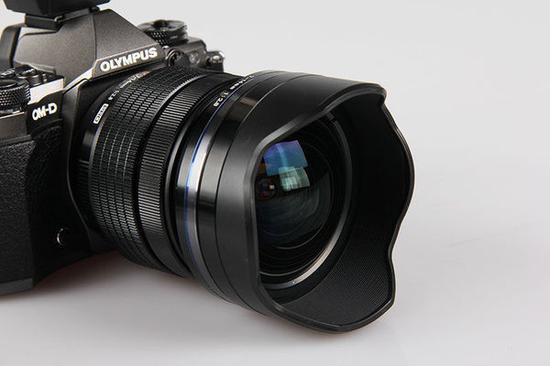
Moreover, Olympus M.ZUIKO DIGITAL ED 7-14mm f/2.8 PRO continues the robust and compact design concept of the PRO series lens. The dust-proof and splash-proof structure can effectively prevent dust or water from entering, and cooperate with OM-D E-M1. Or the dust-proof and splash-proof body of the E-M5 Mark II can easily meet the challenges of various harsh environments, providing further protection for outdoor photographers and enthusiasts.
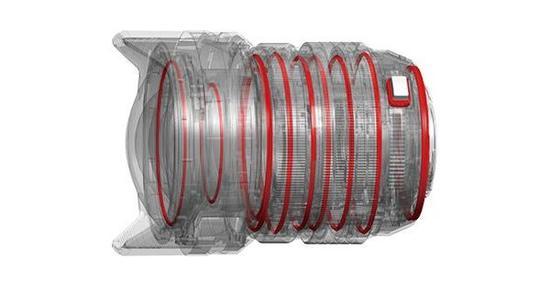
The dust-proof and splash-proof construction is specially sealed at 11 locations.


As the top ultra-wide-angle zoom lens of the current M4/3 system, the volume of the Olympus M.ZUIKO DIGITAL ED 7-14mm f/2.8 PRO is greatly reduced compared to the full-frame type of focal length lens, but Compared with most M4/3 system lenses, there is still a little bit of it. This is understandable for the quality of the image. The overall body of the mirror is black, and the compact and high-quality mirror design is more textured. With the Olympus E-M5 Mark II, the size is also very comfortable, and of course, if it is a PEN series body, it may look a little uncoordinated.
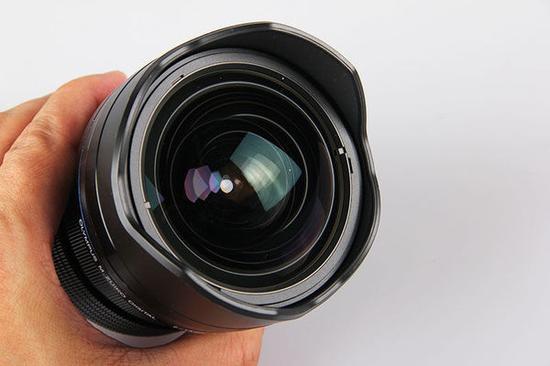
The PRO series lens can be said to be a pile of materials. Basically, Olympus’ optical technology will be reflected in this series of lenses. The iconic ZERO (Zuiko Ultra Low Reflection Optics) coating, a large number of aspherical mirrors (DSA lenses, Super ED lenses, ED lenses, EDA lenses and HR lenses) also help the lens maintain its professional flagship optical quality, at least In theory, it can solve the problems of chromatic aberration, ghosting, distortion and glare that affect the super wide-angle lens. The specific performance depends on the actual shooting.

I already used this Lens for very long time, I love it.
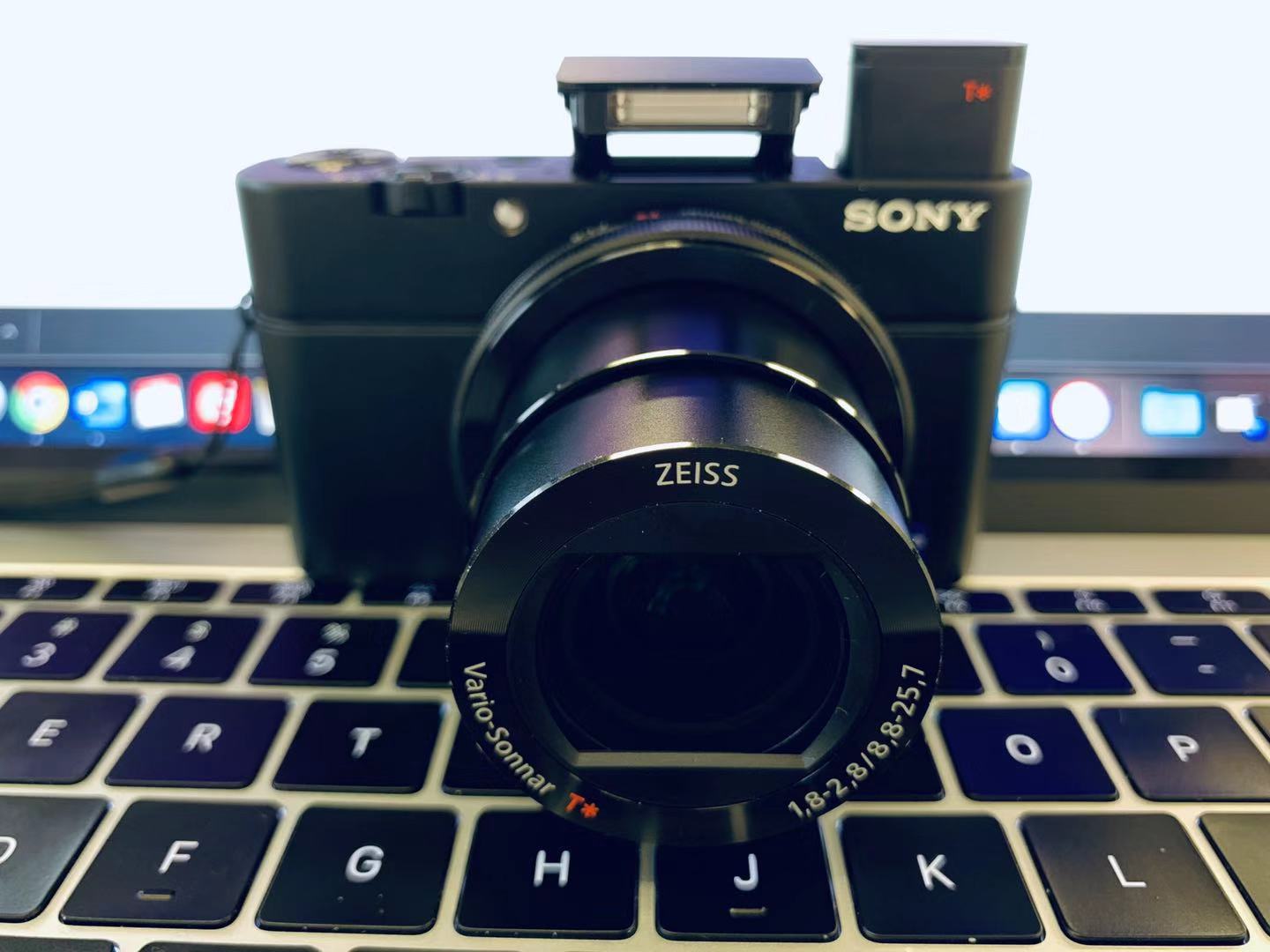
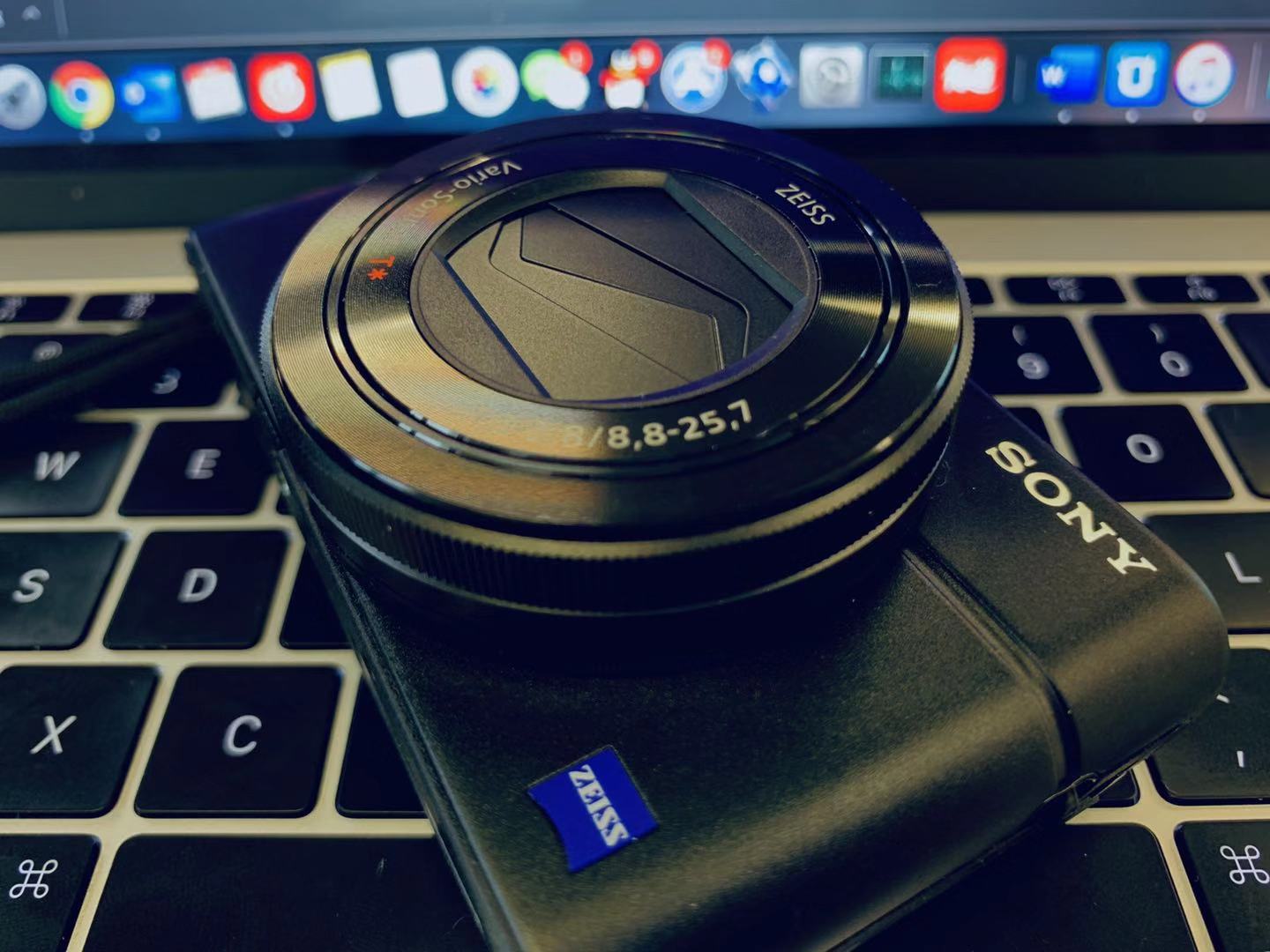
Evaluation: Sony RX100M3

There is already 11 years since I start to take photos. Also, I bought many different cameras as a hobby.

This week I just found this sony rx100mark3 had a good discount, and I went to bought it. Okay, for the habit peoples always call it “black card” because it is small and just like a card can easy to take it everywhere, like a card can put in your pocket.

Okay now I am going to look some Parameter configuration.

The maximum aperture of the black card 3 is 1.8-2.8, and the focal length is 24-70. The large aperture of the measured 1.8 is limited to 24mm, which is constant at 2.8 after about 32mm, and the minimum aperture is 11. For daily use, the telephoto end of 2.8 can provide a good blur, the wide-angle end of 1.8 can also cope with low light environment, the focal length is enough to meet the daily shooting needs.

Battery life

The battery capacity is 1240. The official introduction is 320, and the personal experience is only 200. You need to bring a spare battery for one day, but you can use the charging treasure to charge, so you can still guarantee the continuous power during the tour.

Sony provides some application applets for extra charges. These applets have their own suitable scenes to meet special shooting needs, such as smooth reflection for water-surface scenes, reflection or fogging effects; time-lapse shooting is Take photos at regular intervals and automatically compose a small video for a certain period of time; and use the mobile phone as a remote control to see the live image on the phone and zoom, suitable for self-portrait or party photo. No longer have to worry about the short hand. There are still a lot of small programs, so I won’t introduce them one by one.

In terms of personal use, a large aperture can provide background blur, and the overall sharpness of a small aperture is acceptable. Of course, the above conclusions are too subjective, and there is no original picture, no control group and rigorous picture test, just the personal experience in the process of use.

A thousand people have a thousand Hamlet, and each person’s feelings are different. I will just talk about it, just listen to it.

Online Identity

The use of Internet social media is becoming more and more important in today’s life.

Internet information security has gradually attracted people’s attention, and all countries attach great importance to the field of network trusted identity authentication.

For my understand,I have to make all my social medias name and head portrait to be same. Just like everyone like to called my Jonny even it is not my real name but it can be my online identity, once my friends see it, they will know it is me.

In my opinion, to establish your online identity, you must first define what you want to express. Many websites that can make their own pages provide content layout for users’ personal homepages or personal blogs, so that you can freely arrange the homepages after choosing the template.

To achieve user experience is investment, such as technology investment, you have to develop your own personalized functions, plagiarism is unacceptable, users will use the website when there are obvious different content. At this time, any design of the website will generate user requirements, and require users to follow the survey habits to subdivide personalized functions.

The difference between providing personalized and non-personalized pages indicates that this is a detail and should imply that it should be implied. Don’t overconfidently infer user preferences, and pay attention to protecting the privacy of personal information in the process of personalization.

Okay, now I am going to talk about my Online Identity I did for my Blog,facebook and Twitter.

1.Blog

For my blog I chosen one theme from the wordpress already given which named Sapor theme.

I chosen this theme because I wanted to found a theme suit for the photography, and I found this one I am using now. This one has tow columns which is good to show the Links of my twitter and facebook, also can show the catalogues and tags.

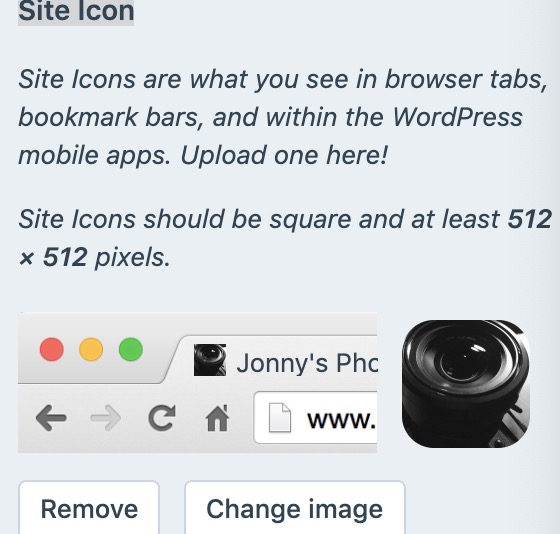
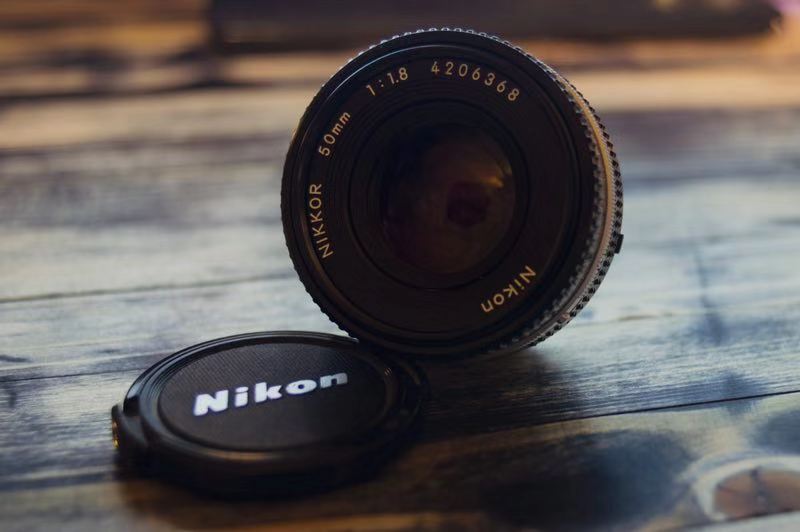
Also I did some with my site identity, I make a Site Icon, it is a picture of my favorite Lens and I introduce it in my blog. For course, I did this picture as a logo or head portrait for my all social media application. As this is my own picture, once you see it, you can know this is me ——Jonny.

2. Facebook

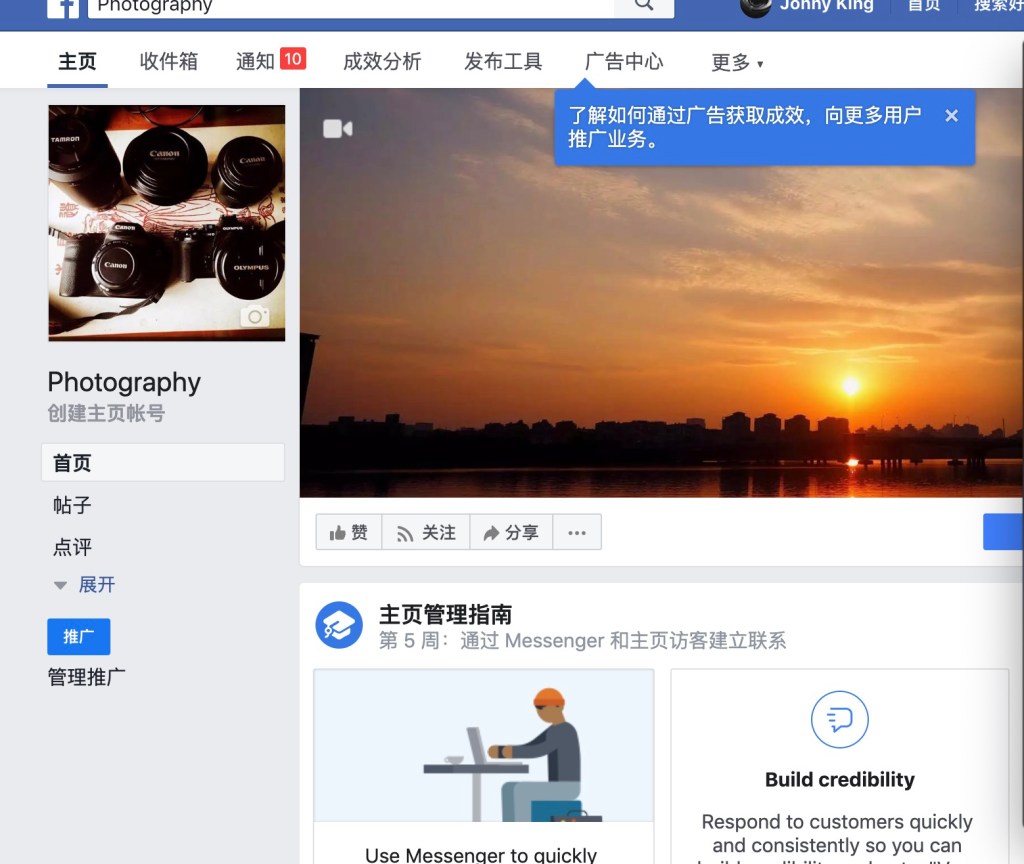
I make a new Facebook Page for my SCM501 course.

Also I use the same picture for my page site and head portrait which can let others know this is my photography face book.

As I did for my online identity, I will keep my blog and my facebook posted information synced.

3.Twitter

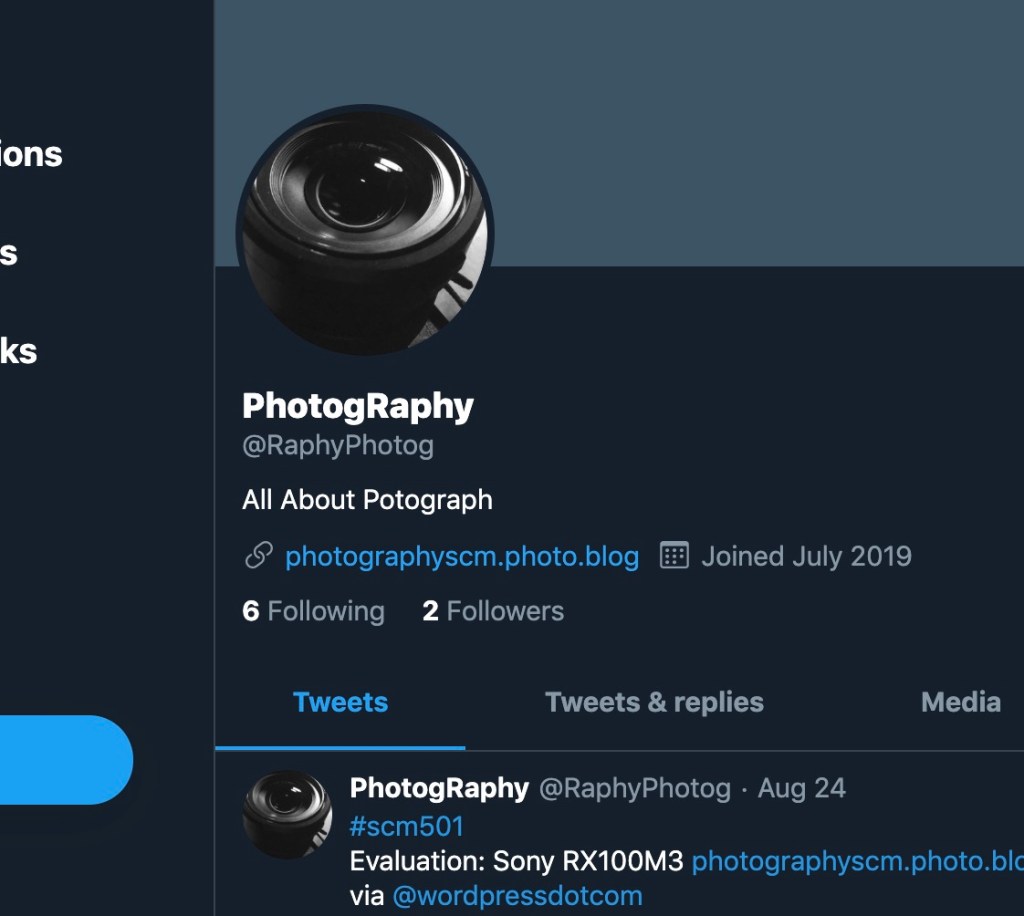
I make a new Twitter for my SCM501 course.

And same as Facebook I keep the head portrait same as the blog.

As I did for my online identity, I will keep my blog and my twitter posted information synced.

Personal Brand Introduction

As you can see from my blog site. I am a photography blogger. I am writing this blog for Social media 501 course, also I want to keep this blog site as my own study how to be a good photographer, to share some article about the photography. I think I will post some photos I took in the daily life, sharing in this blog, everyone can see it and give me some feedback. Others feedback always can let me improve my skills.

The original intention of writing this blog is very simple. I hope that through my sharing, everyone can find the right photographic equipment and simplify everyday photography. But also because my understanding of photography and the understanding of products are getting deeper and deeper, there are many constraints on the quality of photography. I need to analyze them one by one. Many people have a wrong understanding when choosing a photographic equipment, that is, price can determine everything. But this is not the case. Many high-priced cameras are not suitable for some living scenes. On the contrary, many of the introductory cameras will be used in good times and will produce amazing works.

As I am a Photographer, when I have the free time in the normal life, I will try to find something, some where or something to take photos. As I am a Photographer, when I have the free time in the normal life, I will try to find something, some where or something to take photos. May sometimes it will be embarrassing, but I have been used to it for a long time. So my friends are not surprised that I always carry a camera as a habit.

My online brand will only be promoted on Twitter and Facebook , may also WeChat in the early days. When my brand matures, I choose to create a special email address to receive and send messages. Offline Branding I can use my website link and any of my contact information to print my business card, which will help with brand promotion.

Thank you for reading all the way to the end.

Look forward to hearing from you.

Photographic lighting

Photographic lighting refers to the physical adjustment of the lighting to achieve a perfect specific effect during photography. Large luminosity is easy to produce large depth of field and clear images; small luminosity is easy to produce small depth of field and blurred motion image effects.

Light position


The light position refers to the irradiation direction of the light source and the position of the light source with respect to the object. In photography, the light position determines the position of the subject’s light and shade, and also affects the texture and shape of the subject. The light position can be varied, but in the case where the position of the subject and the camera are relatively fixed, the light position can be divided into six types: smooth light, side light, back light, top light, foot light, and scattered light.

Light quality

Light quality refers to the hard and soft characteristics of light. The so-called hard, refers to the shadows produced by the light is clear and strong, the contour is clear, the contrast is high; the so-called soft, the shadow produced by the light is soft and unclear, the contour is gradual, and the contrast is low. Hard light has a distinct directionality, which gives the subject a sharp contrast between light and dark, which contributes to the texture. Hard light tends to give people a sense of fortitude and anger. Soft light has no obvious directionality. It is suitable for reflecting the shape and color of objects, but it is not good at expressing the texture of objects.

For the subject, there are often more than one kind of illumination light when shooting, and various light rays have different effects and effects. Light type refers to the effect of various light on the subject when shooting. The light type is usually divided into five types: main light, auxiliary light, contour light, decorative light, and background light.
Main light:
The main light is the main illumination light of the subject, which plays a leading role in the appearance, contour and texture of the object. At the time of shooting, once the main light is determined, the basic illumination and tone of the picture are determined. It should be noted that for a subject, there can only be one main light. If several light sources are used as the main light at the same time, the subject is equally light-receiving, and the main light is not separated, and the picture appears dull; Several main lights produce shadows on the subject at the same time, and the picture appears disorganized.
Auxiliary light:
The main function of the auxiliary light is to increase the brightness of the shadow part generated by the main light, so that the dark part also exhibits a certain texture and level, and at the same time reduces the image contrast. In the application of auxiliary light, it should be clear that the intensity of the auxiliary light should be less than the intensity of the main light. Otherwise, it will cause the effect of the master, and it is easy to appear obvious auxiliary light projection on the subject, that is, “clip light.” “phenomenon.
Contour light:
Contour light is the light used to delineate the outline of the subject. The contour light gives the subject a three-dimensional and spatial sense. Backlighting and side backlighting are often used as contoured light, and the intensity of the contoured light tends to be higher than the intensity of the primary light. The dark background helps the outline light to stand out.
Decorative light:
The decorative light is mainly used to decorate the part of the subject or to display the level of the detail of the subject. The decorative light is mostly narrow light, and the eye light, the light in the portrait photography, and the flare of the jewelry in the commercial photography are typical decorative lights.
Background light:
The background light is the light that illuminates the background. Its main function is to set off the subject, the rendering environment and the atmosphere.

SLR camera

A single-lens reflex camera (SLR) is also known as a SLR camera. It refers to a camera that uses a single lens and that illuminates the mirror through the lens through a reflective viewfinder.
The so-called “single lens” means that the photographic exposure light path and the framing light path share one lens, unlike the rangefinder camera or the double-reverse camera, the framing light path has an independent lens. “Reflective” means that a plane mirror in the camera separates the two paths: when the viewfinder is down, the mirror falls, the light from the lens is reflected to the pentaprism, and then to the viewfinder; the mirror is lifted up quickly when shooting, and the light can be illuminated to the film. Or on the photosensitive element CMOS or CCD.

DSLR is not always a high-end product
2006 was a year of full-scale eruption of the DSLR war. During the year, Sony, Samsung and Panasonic’s three traditional home appliance manufacturers collectively entered the DSLR market, while traditional manufacturers such as Olympus, Nikon and Pentax also took out their latest low-priced products to deal with them. Intensified product competition, on the other hand, it has greatly enriched the choice of consumers and further reduced the price of entry-level DSLR to freezing point. Although the high-end DSLR products are tens of thousands of yuan, but the entry-level DSLR kit with a lens below 6000 yuan and the single body below 5,000 yuan abound, this price is not a high-end product.
This price has already hit the line of defense for high-end consumer digital cameras. It can be said that since the price separation between DSLR and high-end consumer cameras is not obvious, it will directly shake the choice of consumers who originally intended to purchase consumer cameras. Although the DSLR is slightly larger than the high-end consumer camera, the DSLR’s handling and imaging quality have made a qualitative leap. Plus the ability to replace different lenses as needed, these advantages constitute the absolute temptation of the DSLR single-lens reflex camera. Consumers who choose the most 2000-3000 yuan consumer-grade cameras, although their image quality is also remarkable, but the DSLR can not be equal.

Imaging principle
In this system, the unique design of the mirror and prism allows the photographer to directly view the image through the lens from the viewfinder.
As can be seen in the structure of the single-lens reflex camera, after the light reaches the mirror through the lens, it is reflected to the upper focusing screen and formed into an image. Through the eyepiece and the pentaprism, we can see the outside in the viewing window. Scenery. Light passes through the lens and is reflected by the mirror into the matte viewfinder. The final image appears in the frame through a convex lens and reflected in the pentaprism. When the shutter is pressed, the mirror moves in the direction of the arrow, the mirror is lifted, and the image is captured on the CCD or CMOS, as seen on the viewfinder.
The advantage of a SLR camera compared to a rangefinder camera is that it is WYSIWYG, and the angle of imaging in the viewfinder is the same as the angle of the final sheet. However, compared with the rangefinder camera, the back focus of the SLR camera lens can be simultaneously imaged at the same position of the reflector and the focal plane position of the photosensitive element. It is necessary to generate a false focus before the imaging focal plane, which causes the SLR camera. The structure of the optical lens is more complicated and larger, and the imaging effect is not as direct and transparent as the rangefinder camera. At the same time, the volume of the “reflector” is bulky and bulky.

Demand cause
Do you really need a DSLR?
If you just use the camera to pat the scenery and “sit a visit” commemorative photo, as well as record home entertainment, there is really no need to buy a SLR. DSLR is good, but it is not for everyone because of price and weight. In addition, even if you have a DSLR, it does not mean that you can take good photos from now on. Because DSLR is more powerful, you need to learn more photography knowledge to apply. If you use AUTO for years, the advantages of DSLR will be greatly reduced.
In addition, if you belong to the following situations, then you really need a DSLR.

  1. If you are a professional user, such as a reporter or studio photographer, please choose DSLR.
    Almost at the price of micro-single or outsole digital has fully achieved or comparable to the quality of ordinary DSLR, the difference is only in the operation speed and the convenience of external devices, for portrait shooting without shooting sports or a large number of external flash, DSLR Just a clumsy synonym.
  2. If you have special needs for capturing and need special shooting subjects, please choose DSLR.
    DSLR must be used for the need to take a picture of a celestial body or an external macro lens to take a microscopic world or an externally-shifted lens to shoot a building.

My First Blog Post For SCM 501

I am going to answer the question for the Week 1 course.

Write your first post answering the questions

  1. Which theme have you chosen?
  2. Why have you chosen this theme?

I chosen one theme from the wordpress already given which named Sapor theme.

I chosen this theme because I wanted to found a theme suit for the photography, and I found this one I am using now. This one has tow columns which is good to show the Links of my twitter and facebook, also can show the catalogues and tags.

About

Hello everyone, whatever how you are, I’m very happy and grateful that you are willing to click into my blog.

This blog is going to record some of my investigations and understanding of photography and to share my own experience.

My name is Jonny (Xuan Jin), I like taking photo when I have free time. Now, I already have 11 years experiences of take photo. I am very happy to share my ideas and experiences in this blog. I will do some evolution about the lens and cameras which I have use from 2018 to now.

All the in formation in this blog is from the course — Social Media 501 NMIT Nelson.

If you want to use my article please let me know.

My email is Xuan-Jin@live.nmit.ac.nz.