To be honest it is the second time in this year that I talk about the Intellectual Property, so I will just use some words like a reference from my own work done in the MUV601 course. Here is the link: https://muvjonny.home.blog/2019/04/08/sl-protecting-intellectual-property/
- what is Intellectual Property?
Intellectual property is the invisible creation by our mind. It can be invention, design, name, logo and so on. There are so many things like these that you may think they are your intellectual property.
The role of intellectual property in international economic competition is increasing. We need a full understanding of intellectual property
To say Intellectual Property in the legal sense, Intellectual Property requires copyright, patents and trademarks.
- Copyright
With material rights, no other person may sell or manufacture the same article without the permission of the obligee. It dose not include rational use.
- patent
Own the right to an idea, which can be a business idea, new engine technology, or anything that doesn’t yet exist, and is a new technology to improve an existing approach.
- Trademark
The right to own a brand, logo or slogan that no one else can use or make.
COPYLEFT
I did some second research online and here can be link of my reference: https://www.gnu.org/licenses/copyleft.en.html https://en.wikipedia.org/wiki/Copyleft
Copyleft is a way to protect program copyright. This does not mean giving up copyright; in fact, it is not copyleft. The word “left” in Copyleft has nothing to do with the verb “away” – it’s just the opposite of “right”.
Copyleft is a general method of free programs or other work, and requires all modifications and derivatives of programs (or other work) to be free.
The easiest way to make free software is to put it in the public domain without copyright restrictions. If they are smart enough, they should be allowed to share plans and improvements. But it also allows those who are reluctant to cooperate to turn the project into proprietary software. They can make changes more or less and distribute them as proprietary software. Those who have obtained a revised version of the procedure will not have the freedom granted to them by the original author because the intermediary cancelled it.
Copyleft allows anyone to make any changes to the program, but anyone who wants to distribute the program can get the original code. According to the Copyleft principle, all free software allows users to copy, modify and distribute freely, but the original code must be left to each user so that others can get the modified original code to ensure the distribution and development of free software. People who modify free software can certainly charge for providing modified software for other people’s use, but they can’t hide the original code to protect the original created intellectual property for public use, rather than a person’s profit tool.
How the Permissions system help to protect/open IP
For my understand of this part, how can the permissions system help to protect IP is not an easy thing to explain. When we created an object in the second life, this means we are already to be the creator and the owner of this object. We can make permissions in our blog post about it. Such as not allow anyone to copy, modify or change it, not allow anyone do any illegally shared or sell without permission with it.
Creative Commons
The user can clearly know the owner’s rights, and it is not easy to infringe the copyright of the other party, and the work can be effectively spread.
Four core rights
- Attribution (BY): The original author must be mentioned.
- Noncommercial, (NC): Not for profitable purposes.
- No Derivative Works, (ND): The original work may not be modified and may not be recreated.
- Share Alike, (SA): Allows modification of the original work, but must be published using the same license.
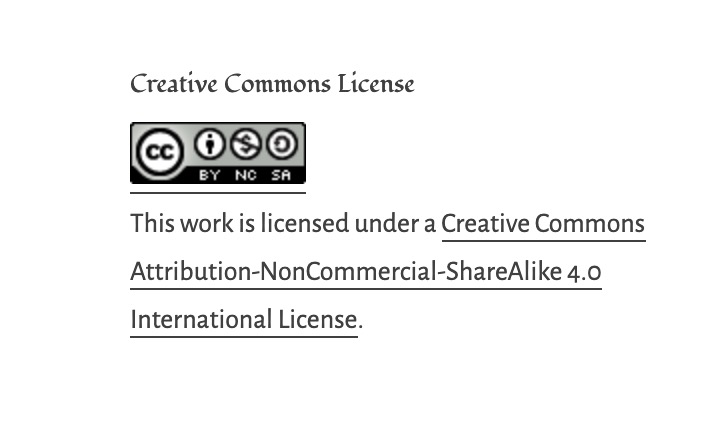
Here is my creative commons license

 Jonny's Photography Blog